
120 climate-adaptive interventions completed; 40,000 m² of green roofs; water storage increased by 2.2 million litres in pilot districts
Figures reported by the city programme, verified against published case-study sources.
Background
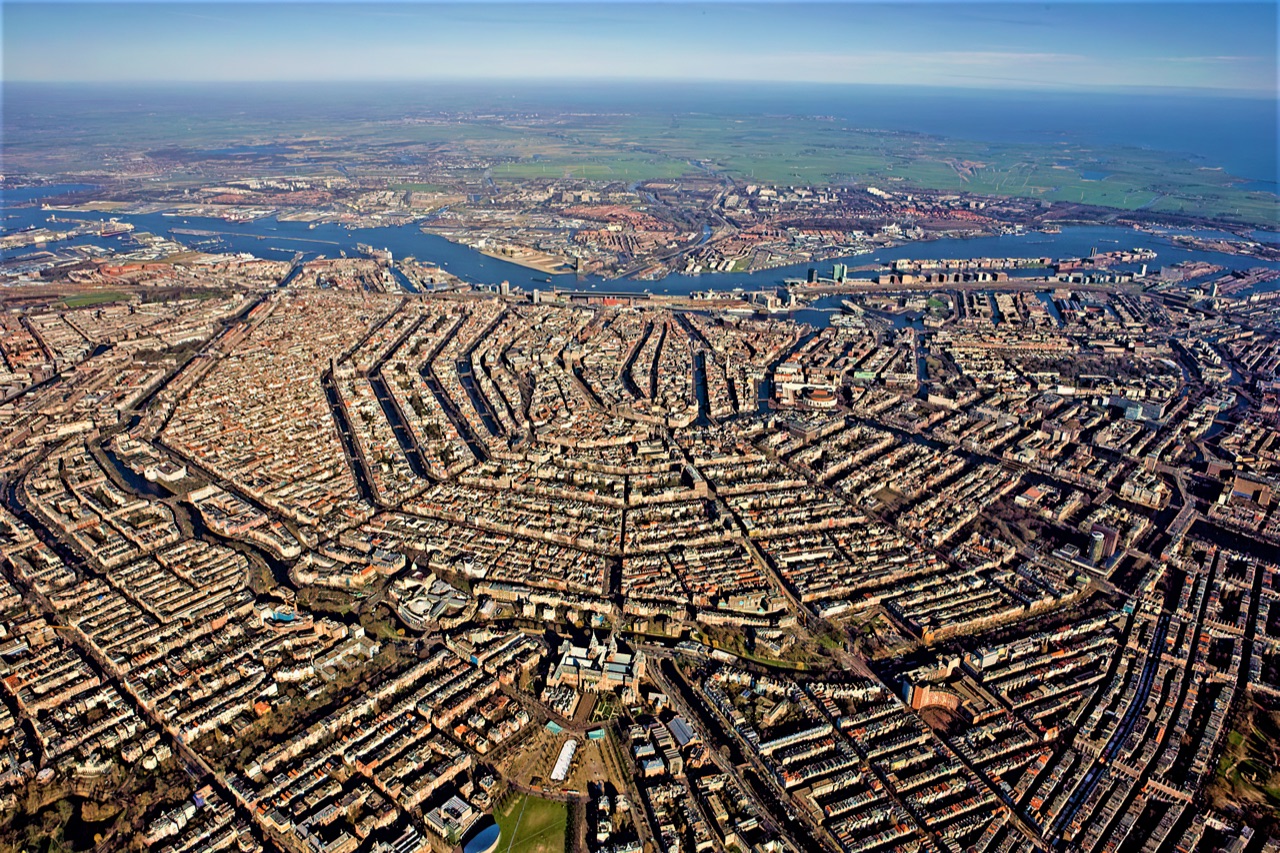
Amsterdam’s 2020 Climate Adaptation Strategy moves beyond emergency response to embedding resilience into the city’s fabric through neighbourhood-scale design. The programme identifies 20 pilot neighbourhoods with the highest compound climate exposure and co-designs adaptations with residents.
Approach
Each neighbourhood pilot starts with a community climate risk workshop using translated outputs from the Urban Climate Risk Index. Residents co-design interventions from a menu of tested solutions including: wadi gardens (shallow depression wetlands), porous pavements, bioswales, green roofs, and water squares.
The Green Roof Designer tool is made publicly available to homeowners through the city’s website, alongside a subsidy calculator showing the €30/m² municipal green roof grant.
Results
- 40,000 m² of new green roofs installed in pilot neighbourhoods (2020–2024)
- Water storage capacity in pilot areas increased by 2.2 million litres
- 92% of residents in pilot areas report satisfaction with climate-adaptive public spaces
- Amsterdam’s co-design process used as a template by 8 European cities